
2014年10月14日火曜日

2014年1月10日金曜日
Ainu and Japanese official history
when
arises a discussion about origin of Japanese then people immediately
show their real mind. people's mind usually is fullfilled with myths
created by official Japanese historians: "Ainu came from North as far as
they live pon Hokkaido", "we r not anyhow related to Korean", "how can u
be against Japanese? Ainu r a part of Japanese" and so on. and when u
try to point that all these statements r wrong
and show the real picture ur opponents usually begin just troll, repeat
their stupid statement. the most amazing here is that they call their
statements "opinions" though to have an opinion u need first think by
urself not to follow dully to official point; to be not a part of herd
but a personality.
the fact that Ainu r not already physically oppressed by Japanese doesn't mean anything actually. Ainu r thrown out of official Japanese history. Ainu haven't yet received their rightful place in the history of Japan, as an important component which took participation in the formation of Japanese ethnicity.
the fact that Ainu r not already physically oppressed by Japanese doesn't mean anything actually. Ainu r thrown out of official Japanese history. Ainu haven't yet received their rightful place in the history of Japan, as an important component which took participation in the formation of Japanese ethnicity.
2013年5月4日土曜日

2013年3月19日火曜日
paikar 15013
トゥレシノンノ
Paikar rera tap oricinar miksu 15012
Paikar rera dub original mix 2013
パイカラレラダブ オリジナルミックス 二千十三
Tam miksu anak Aynu purihi asir pa iway okari humi ne.
'Paikar' a-ye itak 'asir pa toyko ki' ne. Paikar anak Aynu purihi pa etok ne. Hemanta kus ne no a-ram easkay? Oyak sir rehe (sak, sitcuk, mata) or ta 'pa' a-ye sinrit isam kus nerok sir or ta asir pa iway isam a-ram easkay. Or wa, hempara ta tam iway an nankor? Hemanta to ta an nankor? Aynu utar anak teeta wa no Matnaw hemisuhere ta oka. Tap ne kus inkar=an ro: hemanta to iyotta pase iyotta nucaktek paikar to an ya? Matnaw hemisuhere ta iyotta pase paikar to anak paikar ekuinokkusu to ne (sirpeker tanne-hi anak sirkunne tanne-hi tura uneno-an pe ne). Tampe kus Aynu purihi asir pa iway nea to ta an nankor a-ram easkay.
Tam paikar anak hap rap cup iye 20 to 11:02 AM an.
Paikar rera means 'wind of spring' or 'wind of new year feast' in Ainu.
Ainu word for spring word for 'spring', paikar/paykar, consists if the following morhemes: pa - 'year', i - 'to do something intensively', kar - 'to do something in order to get some result'. It means that traditional Ainu new year feast most probably was in spring. but when in spring? as far as Ainu laways have lived in Northern hemisphere and the most notable spring day of Northern hemisphere is Vernal equinox so it can be supposed that paikar feast took place on the day of Vernal equinox.
This year paikar is March 20 11:02 AM
パイカララはアイヌ語の「春の風」それとも「新年祭りの風」の言葉です。
アイヌ語のpaikar「パイカラ」「春」の言葉はpa「年」,i「集約」,kar「作る」の形態素から成り立つ。何の意味するか?アイヌは伝統の新年祭りが春に行えた。アイヌは普通北半球に住んでいたので、北半球には春の一番目ぼしいの日は春分点で、paikarの日付は春分点であろう。今年のpaikarは三月二十日11:02AM来る。
Ainu language lesson # 2
iye tu kampi
lesson # 2
hunna an?
unarpe: Hunna an?
Tresi: Tresi ku=ne ruwe ne.
unarpe: Tresi e=ne ruwe ne?
Tresi: Ruwe un.
unarpe: Ahup wa sini yan.
Tresi: E.
Unarpe: E=iwanke ya?
Tresi: Ku=iwanke wa.
new words and expressions:
hunna - who?
hunna an? - who is [there]?
ne - to be - copula
ruwe ne - literary "there is a trace" - auxiliary verb expressing highest degree of confidence, it is supposed that speaker was a participant of describing events or have seen everything by himself; 'ruwe ne' is often left without any translation at all.
ruwe? - interrogative form of 'ruwe ne'
un - a form of affirmative answer
ruwe un - 'yes' (a variat of affirmative answer)
ahup - to enter (plural form)
wa - and: ahup wa sini - enter and take a rest/having entered take a rest
e - 'yes' (affirmative answer to an order or a question)
iwanke - literary 'to be used', 'to be fine', 'to be OK'
wa - sentence final particle, it has no meaning, it is attached just in order to soften a sentence, in order to make it less abrasive.
translation:
aunt: who is there?
Tresi: this is Tresi.
aunt: are you really Tresi?
Tresi: yes it is.
aunt: enter and take a rest.
Tresi: OK.
aunt: how are you?
Tresi: I am fine.
commentaries
1. copula
in Ainu language copula is 'ne', but it's just the stem, and if we are going to express 'I am', 'you are' and so on we have to attach personal markers: ku= 1sgsb, e=2sgsb: ku=ne "I am", e=ne "you are".
it is very important to note that personal markers should not be separated from the stem, i.e. it's impossible to say: *Ku Tresi ne only Tresi ku=ne.
also it is possible to omit anything except verb if meaning can be understood from the context.
if 'ruwe ne' auxiliary is placed in the end of a phrase sentence becomes a bit more completed.
2. way of asking a question
when you ask a question you can attach word 'ruwe' in the end of sentence. meaning doesn't change much in this case. for example:
Tresi e=ne ruwe?
Tresi e=ne ya?
Tresi e=ne?
3. ways to say "yes"
assertative answer to a recommendation/order is expressed by word 'e', for example:
- ahup was sini yan
- e
it's important to note that this 'e' should be a long-drawn-out while in another cases longtitude of a sound has no meaning upon Ainu language.
(assertative answers to w/h questions will be discussed below)
if question is ended with 'ruwe' assertative answer also should be ended with 'ruwe'.
if question ends with particle 'ya' then assertative answer is just repetition of what is said in question without particle 'ya':
- Tresi e=ne ya?
- Tresi ku=ne.
the same form of assertative answer can be used if question is ended with 'ruwe'.
respectful/formal variant of assertative answer is 'ho', it is used when we address to a honored person.
4. sentence final particle 'wa'
being placed in the end of a sentence particle 'wa' soften the intonation of the phrase. for example, if it is said just 'ku=iwanke' it is normal and competent Ainu phrase but is sounds a bit abrasive. if particle 'wa' is added in the end of the phrase intonation becomes less abrasive.
5. greetings
there are no such expressions as japanese 'konnichi wa' - 'good afternoon' pon Ainu language.
in old days, when one person came to visit another one, they didn't submit a voice from street and designated the arrival by a tussiculation and a percussion on something, expecting while people indoors will notice. then the people who were indoors, asked who has come and were tidied up indoors and already then left towards to the visitor. when the visitor got permit to enter and entered, new greetings began.
Now expression 'e=iwanke ya?' ~ how are you? used as a greeting in all situations.
Also there is expression 'he' corresponding to '... haven't seen you for ages' for example:
utar he! ~ friends, I haven't seen you for ages!
Tresi he - Tresi, I haven't seen you for ages!
lesson # 2
hunna an?
unarpe: Hunna an?
Tresi: Tresi ku=ne ruwe ne.
unarpe: Tresi e=ne ruwe ne?
Tresi: Ruwe un.
unarpe: Ahup wa sini yan.
Tresi: E.
Unarpe: E=iwanke ya?
Tresi: Ku=iwanke wa.
new words and expressions:
hunna - who?
hunna an? - who is [there]?
ne - to be - copula
ruwe ne - literary "there is a trace" - auxiliary verb expressing highest degree of confidence, it is supposed that speaker was a participant of describing events or have seen everything by himself; 'ruwe ne' is often left without any translation at all.
ruwe? - interrogative form of 'ruwe ne'
un - a form of affirmative answer
ruwe un - 'yes' (a variat of affirmative answer)
ahup - to enter (plural form)
wa - and: ahup wa sini - enter and take a rest/having entered take a rest
e - 'yes' (affirmative answer to an order or a question)
iwanke - literary 'to be used', 'to be fine', 'to be OK'
wa - sentence final particle, it has no meaning, it is attached just in order to soften a sentence, in order to make it less abrasive.
translation:
aunt: who is there?
Tresi: this is Tresi.
aunt: are you really Tresi?
Tresi: yes it is.
aunt: enter and take a rest.
Tresi: OK.
aunt: how are you?
Tresi: I am fine.
commentaries
1. copula
in Ainu language copula is 'ne', but it's just the stem, and if we are going to express 'I am', 'you are' and so on we have to attach personal markers: ku= 1sgsb, e=2sgsb: ku=ne "I am", e=ne "you are".
it is very important to note that personal markers should not be separated from the stem, i.e. it's impossible to say: *Ku Tresi ne only Tresi ku=ne.
also it is possible to omit anything except verb if meaning can be understood from the context.
if 'ruwe ne' auxiliary is placed in the end of a phrase sentence becomes a bit more completed.
2. way of asking a question
when you ask a question you can attach word 'ruwe' in the end of sentence. meaning doesn't change much in this case. for example:
Tresi e=ne ruwe?
Tresi e=ne ya?
Tresi e=ne?
3. ways to say "yes"
assertative answer to a recommendation/order is expressed by word 'e', for example:
- ahup was sini yan
- e
it's important to note that this 'e' should be a long-drawn-out while in another cases longtitude of a sound has no meaning upon Ainu language.
(assertative answers to w/h questions will be discussed below)
if question is ended with 'ruwe' assertative answer also should be ended with 'ruwe'.
if question ends with particle 'ya' then assertative answer is just repetition of what is said in question without particle 'ya':
- Tresi e=ne ya?
- Tresi ku=ne.
the same form of assertative answer can be used if question is ended with 'ruwe'.
respectful/formal variant of assertative answer is 'ho', it is used when we address to a honored person.
4. sentence final particle 'wa'
being placed in the end of a sentence particle 'wa' soften the intonation of the phrase. for example, if it is said just 'ku=iwanke' it is normal and competent Ainu phrase but is sounds a bit abrasive. if particle 'wa' is added in the end of the phrase intonation becomes less abrasive.
5. greetings
there are no such expressions as japanese 'konnichi wa' - 'good afternoon' pon Ainu language.
in old days, when one person came to visit another one, they didn't submit a voice from street and designated the arrival by a tussiculation and a percussion on something, expecting while people indoors will notice. then the people who were indoors, asked who has come and were tidied up indoors and already then left towards to the visitor. when the visitor got permit to enter and entered, new greetings began.
Now expression 'e=iwanke ya?' ~ how are you? used as a greeting in all situations.
Also there is expression 'he' corresponding to '... haven't seen you for ages' for example:
utar he! ~ friends, I haven't seen you for ages!
Tresi he - Tresi, I haven't seen you for ages!
2013年3月10日日曜日
Ainu language lesson # 1
'e-'a-sir kampi
lesson № 1
i-yay-ray-ke-re
text
totto: topenpe an na. e yan.
unarpe: iyayraikere.
totto: keraan?
unarpe: sonno keraan.
totto: usey e=ku rusuy ya?
unarpe: ku=ku rusuy na
totto: o.
unarpe: hioy'oy.
new words
totto - mother
unarpe - aunt
topen-pe - cakes/candies
an - to be/to exist/to present
na - emphatic assertive particle
e - to eat (t.v.)
yan - particle used when polite imperative is formed
iyayraykere - thanx
keraan - to be tasty (stative verb)
sonno - really/truely
usey - hot water/boiling water (here is used to denote tea/coffe)
rusuy - want
ya - question marker particle
ku= personal affix of 1sg.sb.
o - here you are
hioy'oy - thanx (unformal)
translation
mother: this is candies, eat please.
aunt: thanx.
mother: is it tasty?
aunt: it's very tasty.
mother: wish you drink tea/coffee?
aunt: I wish.
mother: here you are.
aunt: thanx.
commentaries
1. iyayraykere - is the most widely used word to express gratitute. iyayraykere can be used by both men and women while hioy'oy is used mostly by women. hioy'oy is also used when they address to children.
2. imperative expressions
when they address to one person imperative form is just verb stem, for example: e - eat,
when they address to more than one person particle yan should be placed after the verb stem: e yan; and the same expression is used as respectful order addressed to one person.
3. interrogative sentences
there are different ways to ask common (yes/no) question. the easiest way is slight rise of intonation in the end of a sentence. then it is possible to form interrogative sentence using interrogative particle 'ya' which is placed in the very end of the sentence. when particle 'ya' is used slight intonation rising in the end of sentence also takes place.
4. personal affixes/personal markers
in Ainu verb should be obligatory expressed person and number of subject and object by different personal affixes. right now you are to remember the following two personal markers:
ku= 1sg.sb.
e= 2sg.sb
then
for instance:
'I drink' is ku=ku,
'you drink' is e=ku
(for convenience of allocation of personal affixes in text they separate from words to which are attached, by the mean of a sign "=")
5. emphatic sentence final particle 'na'
The particle na when is placed in the end of a sentence has the meaning of inducing a interlocutor to make something, it has the meaning of turn to some actions for example, if it is told: topen-pe an - that it simply ascertaining of the fact: 'here are cakes' and when it is told topen-pe an na is means 'here are cakes, eat!'.
lesson № 1
i-yay-ray-ke-re
text
totto: topenpe an na. e yan.
unarpe: iyayraikere.
totto: keraan?
unarpe: sonno keraan.
totto: usey e=ku rusuy ya?
unarpe: ku=ku rusuy na
totto: o.
unarpe: hioy'oy.
new words
totto - mother
unarpe - aunt
topen-pe - cakes/candies
an - to be/to exist/to present
na - emphatic assertive particle
e - to eat (t.v.)
yan - particle used when polite imperative is formed
iyayraykere - thanx
keraan - to be tasty (stative verb)
sonno - really/truely
usey - hot water/boiling water (here is used to denote tea/coffe)
rusuy - want
ya - question marker particle
ku= personal affix of 1sg.sb.
o - here you are
hioy'oy - thanx (unformal)
translation
mother: this is candies, eat please.
aunt: thanx.
mother: is it tasty?
aunt: it's very tasty.
mother: wish you drink tea/coffee?
aunt: I wish.
mother: here you are.
aunt: thanx.
commentaries
1. iyayraykere - is the most widely used word to express gratitute. iyayraykere can be used by both men and women while hioy'oy is used mostly by women. hioy'oy is also used when they address to children.
2. imperative expressions
when they address to one person imperative form is just verb stem, for example: e - eat,
when they address to more than one person particle yan should be placed after the verb stem: e yan; and the same expression is used as respectful order addressed to one person.
3. interrogative sentences
there are different ways to ask common (yes/no) question. the easiest way is slight rise of intonation in the end of a sentence. then it is possible to form interrogative sentence using interrogative particle 'ya' which is placed in the very end of the sentence. when particle 'ya' is used slight intonation rising in the end of sentence also takes place.
4. personal affixes/personal markers
in Ainu verb should be obligatory expressed person and number of subject and object by different personal affixes. right now you are to remember the following two personal markers:
ku= 1sg.sb.
e= 2sg.sb
then
for instance:
'I drink' is ku=ku,
'you drink' is e=ku
(for convenience of allocation of personal affixes in text they separate from words to which are attached, by the mean of a sign "=")
5. emphatic sentence final particle 'na'
The particle na when is placed in the end of a sentence has the meaning of inducing a interlocutor to make something, it has the meaning of turn to some actions for example, if it is told: topen-pe an - that it simply ascertaining of the fact: 'here are cakes' and when it is told topen-pe an na is means 'here are cakes, eat!'.
2013年2月19日火曜日
against diffusionism
19th February 2013 we had the first meet of our anthropological seminar after quite a long brake. twas devoted to diffusionism.
some days ago I again met some terrible expression of a wide spread diffusionism myth. a Japanese guy pon youtube insisted that Ainu borrowed bear rite from Siberia.
it's a great lol first of all cause taking into consideration the fact that Ainu had seen bears almost every day during a period over 10000 years before they saw any Siberian and sure it hardly can be imaged that Ainu could not elaborate bear rite by themselves and waited till coming of Siberian.
bear rite is one of the most elementary and fundamental practics and it was invented many times pon many places independently by all tribes who practised hunting as one of their main activity so it's just a highest degree of stupidity to think that some tribe borrowed it from from another. wide spread of bear rites among very different ethnicities covering a huge territory and great diversity of meanings of bear rite clearly shows us that it obviously was invented many times independently.
diffusionism is theory that states that all things all technologies all ideas were invented just once and then took place just their diffusion. twas one of old european anthropology idea and it has already gone in Europe while still is maintained in Japan cause Japanese anthropology is sometimes a true cargo cult: some Japanese anthropologists often uncritically and stricktly follow to some ideas which were already thrown in West and they think of themselves as true western people while really they are just a ridiculous parody.
of course I speak mostly of extremities of diffusionism which states that all stuff of culture was invented only once. of course there are many examples of diffusion of ideas things and technologies but we are to note that in all such cases spread items usually are pretty complicated/unique (Chinese writing system, guns, christianity and so on) and there are many items which are elementary enough to be invented many times in many places independently (boats, ceramics, bows and so on).
it should be always taken in mind that similar nature conditions usually form similar practics and also always should be paid a due attention to contexts first of all to the context of nature. I guess if all anthropologists pay due attention to context diffusionism will be immediately given up. just due attention to nature context can be very powerful medicine against diffusionism.
moreover here is a moment of ideology and geopoloictics: Japanese offi always try to present Ainu as a 'wild northern tribe' that's why they always speak of archaeological cultures of Japanese archipelago not as of technical complexes but as of real cultures and use also some myths of diffusionism such as myth of borrowing of bear rite from Siberia. the goal of this is clear: to distinguish artificially Ainu from their roots and ignore the role of Ainu component in Japanese history.
and a moment of dirty right wing scum geopolitical games.japanese right wing scum think so: 'if Ainu are 'northern wild tribe' and if they were subdued by Japanese then all 'Ainu lands' should be Japanese'. this idea is never pronounced publicly but it is widely thought.
some days ago I again met some terrible expression of a wide spread diffusionism myth. a Japanese guy pon youtube insisted that Ainu borrowed bear rite from Siberia.
it's a great lol first of all cause taking into consideration the fact that Ainu had seen bears almost every day during a period over 10000 years before they saw any Siberian and sure it hardly can be imaged that Ainu could not elaborate bear rite by themselves and waited till coming of Siberian.
bear rite is one of the most elementary and fundamental practics and it was invented many times pon many places independently by all tribes who practised hunting as one of their main activity so it's just a highest degree of stupidity to think that some tribe borrowed it from from another. wide spread of bear rites among very different ethnicities covering a huge territory and great diversity of meanings of bear rite clearly shows us that it obviously was invented many times independently.
diffusionism is theory that states that all things all technologies all ideas were invented just once and then took place just their diffusion. twas one of old european anthropology idea and it has already gone in Europe while still is maintained in Japan cause Japanese anthropology is sometimes a true cargo cult: some Japanese anthropologists often uncritically and stricktly follow to some ideas which were already thrown in West and they think of themselves as true western people while really they are just a ridiculous parody.
of course I speak mostly of extremities of diffusionism which states that all stuff of culture was invented only once. of course there are many examples of diffusion of ideas things and technologies but we are to note that in all such cases spread items usually are pretty complicated/unique (Chinese writing system, guns, christianity and so on) and there are many items which are elementary enough to be invented many times in many places independently (boats, ceramics, bows and so on).
it should be always taken in mind that similar nature conditions usually form similar practics and also always should be paid a due attention to contexts first of all to the context of nature. I guess if all anthropologists pay due attention to context diffusionism will be immediately given up. just due attention to nature context can be very powerful medicine against diffusionism.
moreover here is a moment of ideology and geopoloictics: Japanese offi always try to present Ainu as a 'wild northern tribe' that's why they always speak of archaeological cultures of Japanese archipelago not as of technical complexes but as of real cultures and use also some myths of diffusionism such as myth of borrowing of bear rite from Siberia. the goal of this is clear: to distinguish artificially Ainu from their roots and ignore the role of Ainu component in Japanese history.
and a moment of dirty right wing scum geopolitical games.japanese right wing scum think so: 'if Ainu are 'northern wild tribe' and if they were subdued by Japanese then all 'Ainu lands' should be Japanese'. this idea is never pronounced publicly but it is widely thought.
2013年2月18日月曜日
Tresi Nonno anthropology seminar

having wondered how strong and how spread stereotypes and myths are I decided to renew my last year anthropological seminar on early Japanese history but with more attention to methodology.
the first meet is going to take place on February 19 at 6:45 AM SLT
pon Ainu Resort
http://maps.secondlife.com/secondlife/Ever%20After/124/176/3023
(I hope it will become a good tradition and will take place every Tuesday)
feel free to connect me and send any notes
sincerely yours
Tresi Nonno
2012年11月15日木曜日
Ainu - Mongol War Original Mix
Tresi Nonno
トゥレシノンノ
Ainu - Mongol War original mix (2012)
Ainu - Santan-kur Tumi oricinar miks (15012)
アイヌモンゴル戦争オリジナルミックス二千十二
2012年11月14日水曜日
2012年8月2日木曜日
Early history of Japan
12.07.2012
Hello


Toponyms of Ainu origin corroborate this fact, for example: Tsushima <- Ainu.: tuyma – "distant", Fuji <- Ainu: huci – "grandma", "kamuy of fireplace"; Tsukuba <- Ainu: tu ku pa – "head of two bows", Yamatai <- Ainu: ya ma ta i – “place where harbour deeply cuts the land”, many examples of Ainu toponyms can be found in Kindaichi Kyousuke works.
When Ainu moved northward they influenced strongly on the culture of Nivkh, Itelmen and Oroch. This fact had been reflected by language: for example: Ainu word kotan – "settlement", "inhabited area" exists in Old Mongolian as gotan, in the language of Gold – hoton, in Manchurian language – hotan, in Nivkh language – hoton.


The most probable place where Yamatai state could be is a harbour in the mouth of Chikugo river near of the town with the same name (i.e. Yamato) in Fukuoka prefecture in the island of Kyushu.


On the other hand, the evidence of warfare during the Yayoi Period is quite clear. Defencive settlements appeared, which were surrounded by either moats of defensive walls or which were located on the hilltops characterized by poor productivity but by excellent command of view.
...Archaeologistss have also discovered many Yayoi Period tombs for the victims against whom such homicide tools were used or those un which such homicide tools were buried with the bodies...”
But how it could be? From a common point of view Japanese culture has practically no similarities with Ainu culture. (Though as it will be shown in special text the roots of Japanese culture are of Ainu origin) Japanese speak Japanese language but not Ainu. Below I try to explain how it could be.
When in the beginning of Yayoi epoch in Japanese archipelago started to appear first groups of Korean newcomers the archipelago is completely occupied by Ainu and there are almost no free territories and no newcomers are desirable. There are some groups of Ainu, some principalities which wage war between each other and safety of Korean newcomers is quite questionable.
The Ainu leader also has his interests: first, strangers with whom it is going to become related, brought such technologies, possessing which, he can subdue hostile Ainu groups almost without any efforts; besides, the fact of possession the foreign woman also will lift his prestige and prestige of his clan in eyes of another groups of Ainu.
Hello
Today I
would like to speak of early history of Japan
Mainly of
Jomon and Yayoi epoch
It’s
possible that we have not enough time to talk of all points so it this talk
probably gonna be continued
We can
speak of Japan as archipelago only since the end of last glacial period (about
13000 BC)
While
during glacial Japanese archipelago was connected with continent in the
following way:

In the time
of glacial first people of modern anthropology type came to this territory. These
people were direct ancestors of modern/historical Ainu and they set the culture
which later was named Jomon.
This archaeological culture
or a group of cultures existed in Japanese archipelago since about 13000 BC
till about 500 BC.)
Jomon is Japanese calque of English term 'cord mark', 'cord marked
pottery' which describes a characteristic feature of the pottery of this
archaeological culture and on which this culture or a group of cultures was
named.
Jomon pottery is the oldest pottery of the world and one of the most
beautiful also:


There were different types
of ceramics and the most interesting was made by the late of Jomon.
Among Jomon ceramic
artifacts the most interesting are so called dogū - clay figurines of unknown means:

some anthropologists suppose that these dogu can be substitutes of human sacrifice and
are somwhow realted to Ainu inaw http://tresi-nonno.blogspot.com/2012/06/basic-concepts-of-ainu-religion-and.html . Anyway it is possible to
state that they could have some relation to creeds of Jomon people.
The proves
of Ainu and Jomon people relationship are the following:
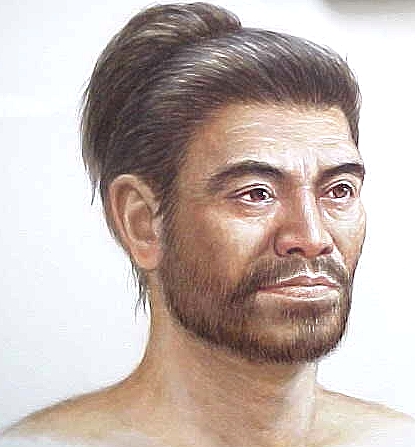
a reconstruction of Jomon
man (proves of the fact that people of Jomon were of Ainu origin are the
following: similarity of Ainu skulls and Jomon skulls:

then are
founded many localities where sites of Jomon epoch are found bearing names traceable to Ainu roots, we can
only assume that persons using the same language as the Ainu were formerly
established in such places. http://tresi-nonno.blogspot.com/2011/12/ainu-jomon-relationship-prooves-by-neil.html
(we should use term Jomon with certain degree
of awareness cause it is just a term invented to designate a complex of
archaeological cultures but later it was used by some Japanese anthropologists
in order to artificially distinguish Ainu culture from its roots)
People of
Jomon epoch were seagatherers, forest gatherers, fishers, forest hunters and
sea hunters and didn't practise agriculture so a vast space of wild nature was
a matter of high importance for existence of their culture.
(Basic
economical articles of Neolithic Ainu were gathering of shells and gathering of
chestnuts and nuts. Jomon archaeological culture is famous by its shellheaps.
And so Neolithic Ainu were basically closely connected with forests of
chestnuts and nuts which covered then most part of Japanese archipelago)
Thus people
of Jomon never had any big settlements, the biggest social unit was local group.
To maintain balance in nature and in
human population was matter of vital importance for such culture.
Because of
it they settled all over archipelago from southern Ryukyu till Hokkaido and
also Kuril islands and southern half of Sakhalin and southern end of Kamchatka:

Toponyms of Ainu origin corroborate this fact, for example: Tsushima <- Ainu.: tuyma – "distant", Fuji <- Ainu: huci – "grandma", "kamuy of fireplace"; Tsukuba <- Ainu: tu ku pa – "head of two bows", Yamatai <- Ainu: ya ma ta i – “place where harbour deeply cuts the land”, many examples of Ainu toponyms can be found in Kindaichi Kyousuke works.
About the
mid of Jomon period some groups of Austronesian people from South-East Asia
appeared in the southern part of Japanese archipelago.
(This group
is named austronesian with a certain degree of conventionalism because there
could be also some people of Yue and Hmong-Mien. And it is important to note
that we have little information of this group.)
This new
migration destroyed the balance of nature and some groups of Ainu were forced
to move northward/ Ainu migration to the island of Sakhalin, the islands of
Kuriles and Kamchatka began.
When Ainu moved northward they influenced strongly on the culture of Nivkh, Itelmen and Oroch. This fact had been reflected by language: for example: Ainu word kotan – "settlement", "inhabited area" exists in Old Mongolian as gotan, in the language of Gold – hoton, in Manchurian language – hotan, in Nivkh language – hoton.
Or, for
example, Ainu word inaw, designating little baton with shavings –
one of the most important objects of Ainu religion, exists in Nivkh language – nau,
in Oroch language – ilau.
In Itelmen
language exists word kamul designating spirits living in volcanoes and
geysers, I believe that this word originated from Ainu word kamuy –
“super human being”.
I think
that it is possible to speak about Ainu colonization because in Ainu language
exists original not borrowed word for expression of modality “should”, “must” –
easirki- “do to do first of all”
while such a languages as Nivkh,
Itelmen, Oroch use borrowed words to express this modality and originally have
just two modalities: “want” and “cannot”. Modality of “should” is a
marker of high organized social system.
While some
groups of Ainu were moving northward in the southern part of Japanese
archipelago appeared some ethnic groups from Korea.
These
migrants were of Mongoloid anthropological type and spoke an Altaic language.
First groups of this migration appeared in Japanese archipelago in the end of
Jomon and in the beginning of Yayoi epoch.
Comparison
of anthropological type of Jomon/Ainu and newcomers of Yayoi:

(Yayoi is archaeological culture which came in
the stead of Jomon. It is also named
after its ceramics which was named after teh place where it was found - Yayoi
district in Tokyo. Yayoi culture lasted from 500 BC till about 300 AD).
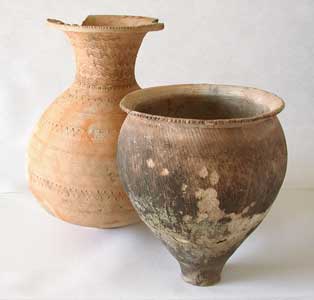
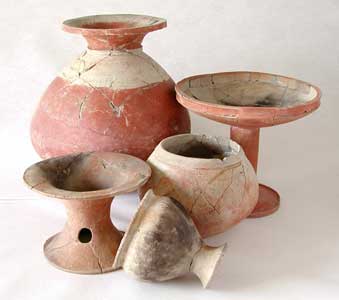
And the
last groups of these ancient Korean migrants appeared in the Japanese islands
in the very end of Yayoi and even in the beginning of the next period – Kofun –
“Burial mounds period”.
It is
generally supposed that this last group was the root of emperor kin tenno and
established Yamato state and that after the establish of Yamato began the epoch
of permanent war between Wajin(Japanese) and Emishi(Ainu). But reality
was a bit more difficult.
First, word Yamato obviously originated
from word Yamatai. (Yamatai is the most ancient state placed in the Japanese archipelago.
Yamatai state was described in Chinese chronicle "Wei Zhi".
Yamatai
state was described in Chinese chronicle "Wei Zhi". We are to note
that Wei Zhi is allocated against others Chinese text of this epoch: it has no
fantasy and it's very realistic, for example distance between Korean peninsula
and Yamatai is described very close to reality. "Wei Zhi" is jut a
diary of a traveller. And there are a lot of Ainu toponyms and names in it, for
example Pimiko queen of Yamatai is a name of Ainu origin, originally it was Pi
mik kur - Person who solves problems and barks)
Word
"Yamato" is written down by hieroglyfes as 大和 and according to the rules these
kanji should be read as 'dai wa' - 'great wa'. ("Great Wa" is the
name invented by Chinese to denote ancient Japan and it was used until term
Nihon was invented.)
But they
are not read so, they are read 'Yamato', so I am to note that reading of these
kanji as "Yamato" isn't even ateji (meaningless kanji which express
the phonetics) but is just a reading which is attached to these kanji. This
fact tells us that word Yamato is of island origin. Moreover I state that
Yamatai/Yamato is a word of Ainu origin.
(Yamato is just a transformation of Yamatai
cause in Old Japanese diphtongs were not allowed and they became a single
soud.)
The word
Yamatai definitely consists of clear Ainu roots and has clear meaning if it is
read in Ainu (this toponym describing a characteristic feature of a certain
local landscape as well as all Ainu toponyms): ya ma ta i - "place
where hardour deeply cuts the land".
(In Wei Zhi
word Yamatai is written down as ateji i.e. using some meaningless hieroglyphes
which express phonetics, here 邪馬台 so it is possible to restore phonetics)
The most probable place where Yamatai state could be is a harbour in the mouth of Chikugo river near of the town with the same name (i.e. Yamato) in Fukuoka prefecture in the island of Kyushu.
All these
facts are well described in book "Wei Zhi read via Ainu language" by
Hashimoto Kiyoshi who though is an amateur and despite of he made some mistakes
but his general ideas are definetily true and shoul be paid attention for.
Having
analysed Wei Zhi Hashimoto defined the place of Yamatai as it's shown in the
following schemes:


There was
appropriate material base for appearing of a state, though agriculture which
usually is the precondition for appear of statehood, was practised restrictedly
by the Ainu of late Jomon, but rich sea hunting sea fishing and sea gathering
definitely could be the base of material stratification and statehood.
“Jomon
people occasionally diverted axes for cutting down trees and bows and arrows
for hunting to the purpose of killing people, but the number of such victims
was very small; among several thousand bodies of Jomon people so far
discovered, less than ten bodies (!) were the victims of homicide.
On the other hand, the evidence of warfare during the Yayoi Period is quite clear. Defencive settlements appeared, which were surrounded by either moats of defensive walls or which were located on the hilltops characterized by poor productivity but by excellent command of view.
An
extensive defensive moat and a watch tower are exemplified by the recent
discovery of the Yoshinogari settlement site (dated to the first to third century.
A. D.) in Saga Prefecture, western Kyushu Island.
While no homicide tools per se in the Jomon Period, there were many kinds made of bronze, iron, and stones used in the Yayoi Period. Among these, the evolution of stone arrowheads in western Japan tends to illustrate this transformation from a peaceful Jomon community to an aggressive Yayoi village.
While no homicide tools per se in the Jomon Period, there were many kinds made of bronze, iron, and stones used in the Yayoi Period. Among these, the evolution of stone arrowheads in western Japan tends to illustrate this transformation from a peaceful Jomon community to an aggressive Yayoi village.
For ten
thousand years since the beginning of Jomon Period, the form of arrowheads was
triangular, and the arrowheads weighted less than two grams. The lighter an
arrow was, the further and faster the arrow flew. On the other hand, the
heavier an arrow, the deeper the arrow could penetrate into the prey's or
victim's body.
...Archaeologistss have also discovered many Yayoi Period tombs for the victims against whom such homicide tools were used or those un which such homicide tools were buried with the bodies...”
Research of
DNA of Japanese population showed that most widely spread Y-japlogroup is D2
which is main Ainu Y-haplogroup (about 86% of Ainu have it). The most notable
fact is that Japanese and Korean have similar mtDNA while Korean have
practically no Y-DNA D2. That means that Ainu took Korean women but not vice
versa. This fact tells us that the rulers were Ainu.
But how it could be? From a common point of view Japanese culture has practically no similarities with Ainu culture. (Though as it will be shown in special text the roots of Japanese culture are of Ainu origin) Japanese speak Japanese language but not Ainu. Below I try to explain how it could be.
When in the beginning of Yayoi epoch in Japanese archipelago started to appear first groups of Korean newcomers the archipelago is completely occupied by Ainu and there are almost no free territories and no newcomers are desirable. There are some groups of Ainu, some principalities which wage war between each other and safety of Korean newcomers is quite questionable.
This
because the first newcomers from Korea set themselves in those territories
which are close to Korean peninsula: in North-West of Kyushu and in Izumo.
With the
arrival of Korean newcomers social tension and opposition not only between
islanders and newcomers but also between various groups of Ainu and newly
arrived Koreans and, it is probable somehow to strengthen the position of their
clans Korean leaders decided to enter the relations with leaders of the most
powerful Ainu clans.
Just let's image the following situation: Korean
chief has a daughter and he made her to marry the chief of most powerful Ainu
clan which is Yamatai clan. The "Korean" leader counts that his
son-in-law will battle for his clan against other Ainu group and other
"Koreans".
The Ainu leader also has his interests: first, strangers with whom it is going to become related, brought such technologies, possessing which, he can subdue hostile Ainu groups almost without any efforts; besides, the fact of possession the foreign woman also will lift his prestige and prestige of his clan in eyes of another groups of Ainu.
And thus
the most brutal Ainu leader takes as wife the most beautiful and educated
«Korean princess». They give birth to a boy who gets the "Korean"
education, learns to be at war at the father and inherits to the grandfather –
becomes head of the "Korean" clan, but he bears Ainu Y-haplogroup.
And one of such sons of the Ainu chief and "Korean princess" became the ancestor of a clan which later was called tenno.
And one of such sons of the Ainu chief and "Korean princess" became the ancestor of a clan which later was called tenno.
In other
words these people were Ainu by their blood but under the influnce of Koreans
they actively boorowed/accepted continental cultures.
Thus
Japanese ethnicity was formed, so Japanese are just mixture of Ainu and Austronesian
and Korean. And Japanese language is just a creol formed on the base of Old
Korean.
Anyway it is just the general outline of the story about how Yamatay became Yamato.
Moreover it should be noted that from the very beginning there were very different groups of Ainu: certain groups created state structures and certain didn't. It is highly probable that those Ainu who later fought with Yamato state were considered as savages even by the people of Yamatai.
Anyway it is just the general outline of the story about how Yamatay became Yamato.
Moreover it should be noted that from the very beginning there were very different groups of Ainu: certain groups created state structures and certain didn't. It is highly probable that those Ainu who later fought with Yamato state were considered as savages even by the people of Yamatai.
Also it highly
possible that there were several Ainu states and that kingdom/principality of
Yamatai subdued those which were more weak.
Also it should be noted that even early Yamatai was very different in its ethnic aspect. From the very beginning there were not only Ainu but also Austronesian and possibly some Korean and Chinese (Korean and Chinese could be on service of prices of Yamatai as ambassadors of Yamatai to Han and Wei)
Also it should be noted that even early Yamatai was very different in its ethnic aspect. From the very beginning there were not only Ainu but also Austronesian and possibly some Korean and Chinese (Korean and Chinese could be on service of prices of Yamatai as ambassadors of Yamatai to Han and Wei)


2012年6月19日火曜日
Nonno Pacific Broadcast
http://shoutcast.tekstuff.net:11240/
Nonno Pacific Broadcast
music of all genres of different cultures of Pasific Rim (Ainu, Japanese, Taiwanese, SEA, Polynesian and so on)
ノンノ太平洋ラジオ
環太平洋地域の文化の色々の音楽
(アイヌ、日本、台湾、東南亜、ポリネシアなど)
Nonno Pacific Broadcast
music of all genres of different cultures of Pasific Rim (Ainu, Japanese, Taiwanese, SEA, Polynesian and so on)
ノンノ太平洋ラジオ
環太平洋地域の文化の色々の音楽
(アイヌ、日本、台湾、東南亜、ポリネシアなど)
2012年6月3日日曜日
Step by step Ainu state comes true in Second Life
Ainu state in Second Life step by step comes true.
Three days ago I visited Kurogawa Machi sim and directors of the sim (Xavii Zahm and Tai Yoshiyuki) told me that they were very interested in Ainu but knew very little of them so they offered me to teach people there about Ainu culture and kindly permitted me to set up Ainu settling pon their sim.
Right now there are a tateana (house of neolithic epoch/winter house) and traditional Ainu bear cage in the Second Life Ainu territory.
 http://slurl.com/secondlife/Aosagi/30/213/28
And now a continuation:
Tai suddenly told me to detach flag. he told that as far as they have medieval sim there should be no modern things. well. I insisted that flag is an important point for Ainu cause it's a marker that the settling ain't just ethnographical village of kanko Ainu but a true Ainu territory. But they were narrow minded weaboo who read just one and a half book on Japan and consider wiki as a serious resourse. finally I had to pick up all my stuff and moved to
http://slurl.com/secondlife/Besiope/145/176/121
if Ainu flag is erected it never should be down.
P.S. also I am to note that there are the same project in SL where modern flags coexist with a reconstruction of traditional settlings, for example Maori village.
Three days ago I visited Kurogawa Machi sim and directors of the sim (Xavii Zahm and Tai Yoshiyuki) told me that they were very interested in Ainu but knew very little of them so they offered me to teach people there about Ainu culture and kindly permitted me to set up Ainu settling pon their sim.
Right now there are a tateana (house of neolithic epoch/winter house) and traditional Ainu bear cage in the Second Life Ainu territory.

And now a continuation:
Tai suddenly told me to detach flag. he told that as far as they have medieval sim there should be no modern things. well. I insisted that flag is an important point for Ainu cause it's a marker that the settling ain't just ethnographical village of kanko Ainu but a true Ainu territory. But they were narrow minded weaboo who read just one and a half book on Japan and consider wiki as a serious resourse. finally I had to pick up all my stuff and moved to
http://slurl.com/secondlife/Besiope/145/176/121
if Ainu flag is erected it never should be down.
P.S. also I am to note that there are the same project in SL where modern flags coexist with a reconstruction of traditional settlings, for example Maori village.
2012年3月19日月曜日
Paikar - Ainu traditional new year feast

Refsing Kirsten writes:
"There seems to be no fixed beginning or end of a pá - it may stretch from one summer to the next or from one winter to the next, as long as it includes one occurence of each of the four seasons. The word for 'spring', páykar, contains the syllable pá, which may inspire some speculations as to whether the beginning of a pá is placed there." The Ainu Concept of Time as Expressed Through Language // European Studies on Ainu Language and Culture, 1993, p. 100
Indeed, word paykar can be transparently devided into three morphemes:
pa - "year"
i-kar - "do something intensively"
i - prefix intensificator,
kar - "to make", "to create".
(The others words marking four season in Ainu language don't contain morphemes with the meaning of ''year'': "winter" - mata, "summer" - sak, "fall" - cuk.)
All these data, anyhow, tell us that traditional ancient Ainu new year feast took place in spring. But when exactly in spring? Since ancient Ainu did not practise agriculture they might had not a fixed day of New Year feast. But it can be supposed that this date was Vernal equinox as far as Vernal equinox is the most notable date of spring in the Northern Hemisphere (Ainu always have been living in Northern Henisphere). Thus we can state that traditional ancient Ainu New Year feast could took place in the date of Vernal equinox.
In this year paikar comes on March 20, 5:14.
Pirka paikar utar!
2012年3月14日水曜日
2011年12月28日水曜日
some critical notes on Vovin book
fragments of Alexander Vovin book can be seen here http://books.google.ru/books?id=8w1_cCWIpEoC&printsec=frontcover&dq=A+Reconstruction+of+Proto-Ainu&source=bl&ots=UUXkGvea5H&sig=UIlHf84S_HCLR1ogKT0AUzSZoYg&hl=ru&ei=rO0ZTYvMNYmdOpPniOMI&sa=X&oi=book_result&ct=result&resnum=2&ved=0CCYQ6AEwAQ
and here can be seen an abstract: http://linguistics.byu.edu/classes/ling450...eports/ainu.htm
first some notes of anthropological character:
bow also is one those things which were invented many times independently in different cultures. Ainu obviously invented their bow after they left their urheimat. so any attempts of exposing of any realtionship between the shape of Ainu bow and some these of SEA definetely have no sense.
the Nivkh and the Itelmen use loin-cloth.
Instead of real anthroplogical prooves Vovin uses some old diffusionism delusions, while real prooves of SEA origin of Ainu are the following:
1) most of Ainu have Y-haplogroup D 2 which is widely spread in SEA and SA and is not known in NEA.
2) the fact that most ancient Jomon sites are in southern islands of Japanese archipelago so that Ainu moved from the South.
Then it should be noted that actually Vovin has taken an attempt to reconstruction not Proto-Ainu but a quite late Upper-Jomon language (about 500 - 1000 B.C.)
Proto-Ainu is Ainu language of pre-Jomon epoch (about 15000 BC and more) and it's can't be reconstructed in principle.
Then how can be in Proto-Ainu lexicon such a late borrowings from Japanese as noko - 'saw', and ita - 'lumber' and kani - 'steel', 'metal'? It seems that Jomon people knew metal industry and manufactured lumbers. LOL with capital letter L!
Then why word kamuy is in Proto-Ainu lexicon if Vovin states that it's a borrowing from Old Japanese?
Also there is some objection on Vovin's reconstruction of Proto-Ainu phonology. Vovin writes:
 He's thought is the following:
1) in all dialects 'w' corresponds to 'w' and only in Krasheninnikov and Klaproth materials 'w' of other dialects corresponds to 'g'/'gu';
2) then having noted that 'w' quite rare occurs in initial position Vovin makes a conclusion that in Ancient Ainu sound 'w' didn't exist.
3) then after data of Krasheninnikov and Klaproth he comes to a conclusion that in Ancient Ainu existed a claster 'hw' or 'gu' and that sound 'w' has developed from this claster, but as far as he made a presupposition that in Ancient Ainu 'w' didn't exist then there should be an another sound in that cluster
4) and finally this sound has been found: analysing the opposition of w - s: iwan, ihguoen - tu-p-e-san, sine-p-e-san Vovin states the existence of hd cluster and states that after 'h' 'd' has become 'w' while in intervocal position has become 's'.
My objections here are the following:
1) can we rely on materials of Krasheninnikov and Klaproth? are they reliable enough basement for reconstruction of phonology system. I think no.
2) 'w' is pretty often in initial position, but there it is mostly written as 'u'. really 'w' should be bound with 'u'. they are variants of one phonema.
3) cluster hd is much more unnatural and difficult than 'w'. I hardly can image that Ancient Ainu had it instead of 'w'.
4) I suspect that roots 'san' and 'wan' in iwan, tu-p-e-san, sine-p-e-san are related. they seems to be different. I think that there are no roots wan - 'ten' in tu-p-e-san, sine-p-e-san, I think that here we have root san < sa-an - 'to descend', 'to go down'.
and here can be seen an abstract: http://linguistics.byu.edu/classes/ling450...eports/ainu.htm
first some notes of anthropological character:
Alexander Vovin, who reconstructed the phonology and the vocabulary of Proto-Ainu, has the view that Ainu language came from Southeast Asia. After completing his comparative studies on Proto-Ainu and Southeast Asian languages, Vovin states that the most distinctive characteristics of Ainu from neighbor languages, such as Korean or Gilyak, are those of the initial consonant cluster and the rich vowel systems. Through the reconstruction of Proto-Ainu, Vovin found that Proto-Ainu had a richer vowel system than modern Ainu, and that several initial consonant clusters (pr-, tr-, hr-,ty- and hd) had been lost in modern Ainu (Vovin 1993, 176). These characteristics of a rich vowel system and consonant clusters are not common to North-Asia.the main critical note is that Vovin pays no attention to structural aspects. Ainu language may be a distant relative of a certain language of a certain SEA languages but should be shown more serious prooves of it, not only phonological and lexical similarities. should be shown structural similarities such as similarity of type of linear model of word form, similarity of structure of verb paradigm. cause language is not a heap of lexemes but is first of all a system of structures. so considering any linguistic question we are to pay most attention to the structure but not to lexics or phonology.
Vovin's reconstruction of Proto-Ainu vowel systems (Vovin 1993, 42)
Another important evidence Vovin indicates are the Proto-Ainuís distinctive features of front /a/ and back /A/; these can not be found anywhere in North-Asia. Another point is both Proto-Ainu and modern Ainu have initial /r/ features that do not exist in north-Asia languages (Vovin 1993, 156). However, all these characteristics we have seen above are common in Southeast Asia.
Vovin also used cultural similarities to support his hypothesis of the relation between Ainu and Southeast Asia and saying;such a rite as bear feast appears amny times completely independently among different cultures which practise hunting as main economic activity, this rite can't be of Siberian or some else origin, it is invented many times in different places by different people and it can't be proof of contacts. the thought that bear feast can be a proof of origin is a very tipical thought of dull-witted diffusionists.
Besides the cult of the bear, which is definitely of Siberian origin
the Ainu also had the cult of the snake, which definitely preceded the former. The cult of the snake is not seen in Siberia, but it is widespread in Southeast Asia.I have never met any 'cult of snake' in Ainu culture. according to common Ainu conceptions snake is an evil being so there could't be any cult of it. I think that it's just a mistake of an early explorers of Ainu culture (may be Leo Sternberg), but this mistake migrates from one text to another of those "anthropologists" who have really dim imagination of Ainu culture.
The same is the case with the cult of the sword, which also has a definite Southern origin.if "cult of swords" really existed in Ainu culture it was developed in a quite late epoch ~ in the middle of the first millenium AD when metal industries was brought to the land of Ainu; so it is absolutely not clear how this "swords cult" can be connected with a hypothetical Ainu urheimat in South-East Asia which they have left many thousand years ago when it was not known not only manufacture of swords, but also manufacture of metals.
Neighboring Manchu-Tungus people and the Nivkh use the compound bow, while the Ainu used the simple bow that again is typical for Southeast Asia.This statement also should be checked.
bow also is one those things which were invented many times independently in different cultures. Ainu obviously invented their bow after they left their urheimat. so any attempts of exposing of any realtionship between the shape of Ainu bow and some these of SEA definetely have no sense.
None of the Ainu neighbors used the loin-cloth as the only garment during the summerAnd this is simply wrong.
the Nivkh and the Itelmen use loin-cloth.
and none of them used poison arrow. All these features exist only in the far more southern regions (Vovin 1993, 162).One more diffusionism obscure. vegetable poison is well know to Aleut who live much more northward. vegetable poison was invented many timed in different cultures and use of it obviously can't be proof of Southern origin.
Instead of real anthroplogical prooves Vovin uses some old diffusionism delusions, while real prooves of SEA origin of Ainu are the following:
1) most of Ainu have Y-haplogroup D 2 which is widely spread in SEA and SA and is not known in NEA.
2) the fact that most ancient Jomon sites are in southern islands of Japanese archipelago so that Ainu moved from the South.
Then it should be noted that actually Vovin has taken an attempt to reconstruction not Proto-Ainu but a quite late Upper-Jomon language (about 500 - 1000 B.C.)
Proto-Ainu is Ainu language of pre-Jomon epoch (about 15000 BC and more) and it's can't be reconstructed in principle.
Then how can be in Proto-Ainu lexicon such a late borrowings from Japanese as noko - 'saw', and ita - 'lumber' and kani - 'steel', 'metal'? It seems that Jomon people knew metal industry and manufactured lumbers. LOL with capital letter L!
Then why word kamuy is in Proto-Ainu lexicon if Vovin states that it's a borrowing from Old Japanese?
Also there is some objection on Vovin's reconstruction of Proto-Ainu phonology. Vovin writes:

1) in all dialects 'w' corresponds to 'w' and only in Krasheninnikov and Klaproth materials 'w' of other dialects corresponds to 'g'/'gu';
2) then having noted that 'w' quite rare occurs in initial position Vovin makes a conclusion that in Ancient Ainu sound 'w' didn't exist.
3) then after data of Krasheninnikov and Klaproth he comes to a conclusion that in Ancient Ainu existed a claster 'hw' or 'gu' and that sound 'w' has developed from this claster, but as far as he made a presupposition that in Ancient Ainu 'w' didn't exist then there should be an another sound in that cluster
4) and finally this sound has been found: analysing the opposition of w - s: iwan, ihguoen - tu-p-e-san, sine-p-e-san Vovin states the existence of hd cluster and states that after 'h' 'd' has become 'w' while in intervocal position has become 's'.
My objections here are the following:
1) can we rely on materials of Krasheninnikov and Klaproth? are they reliable enough basement for reconstruction of phonology system. I think no.
2) 'w' is pretty often in initial position, but there it is mostly written as 'u'. really 'w' should be bound with 'u'. they are variants of one phonema.
3) cluster hd is much more unnatural and difficult than 'w'. I hardly can image that Ancient Ainu had it instead of 'w'.
4) I suspect that roots 'san' and 'wan' in iwan, tu-p-e-san, sine-p-e-san are related. they seems to be different. I think that there are no roots wan - 'ten' in tu-p-e-san, sine-p-e-san, I think that here we have root san < sa-an - 'to descend', 'to go down'.
Ainu - Jomon relationship prooves by Neil Gordon Munro
Neil Gordon Munro Prehistoric Japan 1911:
p.: 665
The main points advanced against the Ainu origin of the primitive sites were that they did not make pottery, nor use stone implements and pit dwellings; the patterns on their wooden implements were supposed to exhibit little or no resemblance to those of neolithic pottery. Later research, however, has proved that pit dwellings have been used by the Ainu of Saghalin and the Kuriles, that they have
p. 666
used pottery and stone implements and that difference between the patterns of the Ainu and of the stone phase is less than has been stated, and can be readily accounted for.
p. 668
The failure of philology to establish an Aryan race warns us that language shares with the gross vestiges
p. 669
of culture the stigma of unrealiability. When, therefore, we find many localities where shellheaps exist bearing names traceable to Ainu roots, we can only assume that persons using the same language as the Ainu were formerly established in such places.
Ōmori, for instance, is generally supposed to be of Japanese origin, and to refer to a large wood or forest. But in suggesting that the name of this locality (which derives special interest from having been the firts shellmound in Japan to yield up its treasures to scientific reserach) comes from two Ainu words '[i]O[/i]' "projecting" and [i]Mori[/i] a "little hill", I am stating a topographical fact of much interest to a primitive people. A rising ground in the neighbourhood of the sea was of prime importance to the shell-mound builders. Here the village was safe from tidal waves and enjoyed a better strategical position than if built on the lower levels.
p. 672
... by the comparison of individual
p. 673
features that i established the identity of Japanese shellmound and Ainu crania and was led to the conclusion that they are of the same stock.
Prof. Koganei, who is at present carrying out an investigation of my specimens, has kindly drawn for me diagraphic outlines of No. 2 and an Ainu skull, which I have superimposed, Fig. 420
(Prehistoric Japan p. 669)
The comparison of two isolated crania, it will be understood, is only made by way of illustration. The same degree of correspondence is not found in all the specimens any more than among the Ainu crania.
日本語の版は http://tresi-nonno.blogspot.com/2012/06/blog-post_15.html
p.: 665
The main points advanced against the Ainu origin of the primitive sites were that they did not make pottery, nor use stone implements and pit dwellings; the patterns on their wooden implements were supposed to exhibit little or no resemblance to those of neolithic pottery. Later research, however, has proved that pit dwellings have been used by the Ainu of Saghalin and the Kuriles, that they have
p. 666
used pottery and stone implements and that difference between the patterns of the Ainu and of the stone phase is less than has been stated, and can be readily accounted for.
p. 668
The failure of philology to establish an Aryan race warns us that language shares with the gross vestiges
p. 669
of culture the stigma of unrealiability. When, therefore, we find many localities where shellheaps exist bearing names traceable to Ainu roots, we can only assume that persons using the same language as the Ainu were formerly established in such places.
Ōmori, for instance, is generally supposed to be of Japanese origin, and to refer to a large wood or forest. But in suggesting that the name of this locality (which derives special interest from having been the firts shellmound in Japan to yield up its treasures to scientific reserach) comes from two Ainu words '[i]O[/i]' "projecting" and [i]Mori[/i] a "little hill", I am stating a topographical fact of much interest to a primitive people. A rising ground in the neighbourhood of the sea was of prime importance to the shell-mound builders. Here the village was safe from tidal waves and enjoyed a better strategical position than if built on the lower levels.
p. 672
... by the comparison of individual
p. 673
features that i established the identity of Japanese shellmound and Ainu crania and was led to the conclusion that they are of the same stock.
Prof. Koganei, who is at present carrying out an investigation of my specimens, has kindly drawn for me diagraphic outlines of No. 2 and an Ainu skull, which I have superimposed, Fig. 420
The comparison of two isolated crania, it will be understood, is only made by way of illustration. The same degree of correspondence is not found in all the specimens any more than among the Ainu crania.
日本語の版は http://tresi-nonno.blogspot.com/2012/06/blog-post_15.html
Ainu in Second Life
My gallery/shop in Uguisu market http://slurl.com/secondlife/Uguisu/112/211/25

etoropa
gallery
ancient Ainu mood
エトロパ
画廊
古代アイヌ気持ち
Instrument attached to my back is tonkori real Ainu tonkori. I was really wonder having found it in SL. This tonkori of SL is much alike that of RL though has only three melodies one of which ain't original Ainu.
Here I am playing tonkori in my gallery:

And here is the shop where I bought tonkori (http://slurl.com/secondlife/Uguisu/74/221/25)

It's a good music instruments shop. All items are pretty realistic and ain't expensive.
2011年12月16日金曜日
Just once upon a time
Just once upon a time
Sine an to ta
(a short story from 'Anuyep' - 'Written things')
Long ago lived among Sakhalin Ainu a young man. Once, when there was a winter, this young man went hunting. He wandered in the forest for a long time, without meeting any game. By the evening he finally managed to shoot a deer. However the deer was not seriously wounded and it was not possible to catch it up on deep snow. The young man decided to stop on a lodging for the night and to continue prosecution of this deer with a dawn. In the morning the young man went on searches of the deer. Having passed for a while he found out the deer, took his bow enclosed an arrow and shot. When he approached to the dead deer he saw that an another's arrow had stuck out of it already. At this moment an unknown girl went out of bushes and told that it was her arrow, and that it was she who had killed the deer. The young man didn't begin to argue and has allowed the girl to take the deer away. He looked after her when she went through the forest. Then he turned and quickly went to opposite side. After a while the young came down in a deep and came across someone's ski traces. One trace as the young man defined, belonged to the girl that shot the deer. The second trace obviously belonged to a man. The young man stopped and was motionless for a while listening to the forest... And then sharply turned and went aside opposite to that where conducted ski traces...
Many years later on one of settlements this young man who was a very old man at that time met an old woman who was for some reason seemed his acquaintance. Little by little - they got to talking. And she told him story that many years ago once when there was winter she had shot a wounded deer and had met a young man who had wounded this deer the first, but had allowed her to take it away...
The old man lit up his pipe and began to remember that after he had given that deer, he had turned back and by the noon had come to a deep and had come across two ski traces one of which obviously had belonged to a man... Having come across these traces he had decided to go hunting to another side... The old woman smiled, added to the old man a few tea and told that person who had possessed man's trace, had been her father...
登録:
投稿 (Atom)